Author: wiesepaint

office paint

Best Low-VOC Paints for Tucson Office Spaces and Indoor Air Quality

Indoor air quality directly impacts employee health, productivity, and your bottom line. For Tucson businesses, where sealed buildings combat extreme heat, paint choices significantly affect the air your team breathes daily. Low-VOC and zero-VOC paints offer a healthier alternative that protects workers while delivering professional results.

Understanding VOCs and Why They Matter

Volatile organic compounds are chemicals in traditional paints that release harmful gases as the paint dries and for weeks afterward. These emissions cause headaches, dizziness, respiratory irritation, and long-term health effects. In tightly sealed Tucson offices running constant air conditioning, VOCs accumulate rather than dissipate, making paint selection even more critical.

Tucson’s desert environment creates unique indoor air challenges. Buildings designed to keep heat out also trap pollutants inside. Research shows VOC levels in newly painted offices can take three to four weeks to return to baseline with conventional paints, compared to just 48-72 hours with low-VOC alternatives.

Benefits for Tucson Businesses

Faster Return to Operations

Low-VOC paints dry quickly with minimal odor, allowing employees to return to workspaces sooner. Traditional paints might require days of ventilation before spaces are comfortable. With low-VOC commercial painting, businesses minimize disruption and productivity losses.

Healthier Work Environment

Employees in healthier environments report fewer sick days and higher productivity. One California school district documented a 25% reduction in respiratory complaints after switching to zero-VOC paints. For Tucson businesses investing in employee wellbeing, paint selection represents an easy, impactful choice.

Regulatory Compliance

The EPA and state agencies regulate VOC emissions in architectural coatings. Maricopa County operates as a designated low-VOC district with stricter requirements than federal standards. Using compliant products protects your business from potential fines while demonstrating environmental responsibility.

Low-VOC vs. Zero-VOC: What’s the Difference?

Low-VOC paints contain 50 grams or fewer of volatile compounds per liter, while zero-VOC products contain less than 5 grams per liter. Both dramatically reduce emissions compared to conventional paints, which can contain up to 250 grams per liter of latex and 380 grams per liter of oil-based formulas.

Modern low-VOC paints from manufacturers like Sherwin-Williams, PPG, and Dunn-Edwards deliver excellent coverage, durability, and color selection. You don’t sacrifice quality for health benefits.

Choosing the Right Products

When selecting low-VOC paints for your Tucson office, consider finish requirements (flat, eggshell, semi-gloss), surface types, and durability needs for high-traffic areas. Professional commercial coatings contractors help identify optimal products that balance performance with air quality goals.

For healthcare facilities, schools, or businesses prioritizing employee wellness, zero-VOC options provide maximum protection. Standard office environments typically achieve excellent results with quality low-VOC products at a lower cost.

Create a Healthier Workspace

Your office paint affects everyone who enters your building. Making healthier choices demonstrates care for employees, clients, and visitors while supporting sustainability goals that many modern businesses prioritize.

Wiese Painting Contractors uses premium low-VOC products from trusted manufacturers, ensuring your commercial painting project protects both your facility and the people inside it.

Contact Wiese Painting Contractors at (520) 327-3200 to discuss low-VOC options for your next Tucson office painting project.

painting compliance

ADA Compliance Colors: What Tucson Business Owners Need to Know

Understanding ADA compliance protects your Tucson business from costly violations while demonstrating a commitment to accessibility. While many property owners focus on physical modifications such as ramps and doorways, color selection and contrast standards are equally important compliance elements that intersect with commercial painting decisions.

What Business Owners Must Know About ADA Color Requirements

The Americans with Disabilities Act establishes minimum requirements to ensure that facilities are usable by individuals with disabilities. Non-compliance carries significant consequences—first violations can result in fines up to $75,000, while subsequent violations may incur penalties of $150,000 per occurrence.

Critical Signage Contrast Standards

ADA color requirements primarily focus on visual accessibility through adequate contrast between surfaces and text. The most critical application involves building signage, where contrast enables individuals with visual impairments to navigate facilities independently.

Current Standards:

  • High contrast requirement using light-on-dark or dark-on-light combinations
  • Historical guideline: 70% Light Reflectance Value (LRV) contrast recommended
  • 2025 ICC A117.1 Update: Proposed 65% contrast ratio requirement
  • Non-glare finishes mandatory (matte, eggshell, or etched surfaces)

Practical Paint Applications

Commercial coatings must maintain high contrast for interior wayfinding elements, safety and emergency markings, and architectural transition points. Strategic color application creates visual cues, enhancing facility navigation for all users.

Recommended High-Contrast Color Combinations

Optimal Pairings:

  • White backgrounds with black or dark blue text (85-90% contrast)
  • Black backgrounds with white or yellow text (85-95% contrast)
  • Deep blue backgrounds with white text (70-80% contrast)

Avoid:

  • Red and green combinations (problematic for 8% of men with color blindness)
  • Pastel backgrounds with light text (insufficient contrast)
  • Orange or yellow on white (causes visual strain)

Balancing Brand Identity With Compliance

Many Tucson businesses worry that ADA requirements limit design flexibility. However, compliance and aesthetic appeal coexist through strategic planning—use brand colors on general walls while reserving high-contrast combinations for regulated signage elements. Arizona’s desert climate adds another dimension, as lighter, compliant colors also resist fading and reflect heat better than darker alternatives.

When Painting Triggers ADA Requirements

The ADA explicitly states that “normal maintenance, painting, or wallpapering” isn’t considered an alteration unless it affects facility usability. Routine commercial repainting doesn’t trigger comprehensive ADA upgrades—with exceptions:

  • Painting over compliant signage without maintaining contrast
  • Changing the wall colors surrounding safety markings
  • Repainting accessible features (parking spaces, ramps) without proper markings

Smart facility managers leverage scheduled painting as an opportunity to proactively enhance accessibility, avoiding costly retrofits under enforcement pressure.

Arizona-Specific Considerations

Tucson’s extreme environment influences practical color choices. UV-resistant formulations maintain required contrast ratios despite 350+ days of sunshine, while weather-resistant coatings preserve visibility through monsoon seasons.

Work With Compliance Experts

Wiese Painting Contractors brings over 70 years of experience serving Tucson’s commercial, government, and institutional facilities. Our team understands ADA requirements and local building codes, ensuring painting projects maintain accessibility compliance while meeting aesthetic objectives.

Contact Wiese Painting Contractors at (520) 327-3200 to discuss your commercial painting project and receive expert guidance on achieving full accessibility compliance.

commercial painting

The True Cost of Deferred Commercial Painting Maintenance in Arizona

Postponing exterior painting maintenance on your Arizona commercial property might seem like a cost-saving strategy during tight budget years. However, this short-term thinking typically transforms minor maintenance expenses into major capital expenditures that far exceed the cost of proactive care. Understanding the true financial impact of deferred commercial painting maintenance helps property managers and business owners make informed decisions that protect their investments.

The Compounding Cost Effect of Delayed Maintenance

When commercial buildings in Arizona go without timely repainting, the consequences accelerate exponentially rather than linearly. What begins as simple paint degradation from UV exposure and desert climate conditions quickly cascades into substrate damage that requires extensive repairs before new coatings can even be applied.

From $3 Per Square Foot to $50 Per Square Foot

Standard commercial painting in Arizona typically costs between $2 and $6 per square foot for properly maintained exterior surfaces. However, when paint failure exposes underlying stucco to Arizona’s harsh elements, repair costs escalate dramatically. Stucco repair alone ranges from $8 to $50 per square foot, depending on damage severity—costs that don’t include the subsequent painting work still required after repairs are complete.

For a 5,000-square-foot commercial building exterior, proactive repainting costs approximately $10,000 to $30,000. Deferring maintenance until stucco damage occurs can push total restoration costs to $40,000 to $250,000 or more, representing a cost multiplier of 4x to 10x the original preventive maintenance expense.

Hidden Costs Beyond Direct Repair Expenses

Structural Damage and Water Intrusion

Failed exterior paint creates pathways for moisture penetration during Arizona’s monsoon season. Water infiltration behind compromised coatings leads to problems invisible from outside: wood rot in framing members, metal corrosion on structural elements, and mold growth within wall cavities. These hidden damages often remain undetected until they’ve caused extensive deterioration requiring invasive remediation.

Wood rot repair and replacement adds $30 to $60 per square foot to restoration budgets. Mold remediation costs between $1,500 and $3,000 for small areas but can exceed $10,000 for widespread contamination. These expenses represent pure waste—money spent fixing preventable damage rather than investing in property improvements.

Energy Efficiency Losses

Deteriorating exterior paint compromises your building’s thermal envelope. Cracks, peeling, and substrate exposure allow heat transfer that forces HVAC systems to work harder maintaining comfortable interior temperatures. In Arizona’s extreme climate, energy waste from compromised building envelopes can increase cooling costs by 15% to 30%, silently draining operating budgets month after month until maintenance is addressed.

Business Disruption and Lost Revenue

Extensive repairs resulting from deferred maintenance require significantly longer project timelines than routine repainting. While preventive painting might take two weeks with minimal business disruption, major restoration projects can extend to six weeks or longer, requiring scaffolding, protective barriers, and restricted access that impacts daily operations.

For retail businesses, deteriorated exteriors directly affect customer perception and foot traffic. Studies consistently demonstrate that first impressions formed within seven seconds significantly influence purchasing decisions. Shabby, neglected exteriors signal poor business management, driving potential customers to competitors with more professional appearances.

Property Value Impact and Market Positioning

Commercial real estate appraisals factor building condition heavily into valuation calculations. Visible deferred maintenance—faded paint, cracking, peeling, staining—signals neglect that depresses property values and complicates financing or sale transactions. Properties requiring extensive restoration work receive lower valuations, reduced rental rates, and face longer vacancy periods when marketing to prospective tenants.

Conversely, well-maintained commercial properties command premium positioning. Fresh exterior commercial coatings can increase commercial property values by $1,200 to $5,000 or more, depending on property size and market conditions. This appreciation offsets maintenance costs while positioning properties competitively within their markets.

Insurance and Liability Considerations

Deteriorated building exteriors can trigger insurance complications. Some commercial property policies contain maintenance clauses that reduce or deny claims when damage results from neglect rather than covered events. Water damage from failed paint—a preventable maintenance issue—may not receive full coverage, leaving property owners personally liable for repair costs.

Structural damage from long-term neglect poses safety hazards. Falling stucco chunks, weakened framing, or water-damaged ceilings create premises liability exposure. A single injury from neglect-related building failure can generate legal costs and settlements far exceeding the avoided maintenance expenses.

The Compounding Time Factor in Arizona’s Climate

Arizona’s intense desert environment accelerates deterioration timelines compared to temperate climates. UV radiation, extreme temperature fluctuations, monsoon moisture, and abrasive dust create conditions where paint failure progresses rapidly once protective coatings break down.

Buildings maintained on three-to-five-year painting cycles experience manageable, predictable maintenance costs. Properties that stretch maintenance intervals to seven, ten, or fifteen years face exponentially worse damage requiring remediation rather than simple maintenance. The mathematical progression is clear: one year of deferred maintenance might cost double the original painting budget to address, while five years of deferral can cost ten times the preventive maintenance investment.

Breaking the Deferred Maintenance Cycle

Establish Preventive Maintenance Schedules

Implement systematic inspection and maintenance programs that address minor issues before they escalate. Annual exterior inspections identify early warning signs—slight chalking, minor cracking, beginning substrate exposure—that can be addressed through targeted touch-ups costing hundreds rather than comprehensive restorations costing tens of thousands.

Budget Realistically for Long-Term Costs

Smart property management incorporates exterior maintenance as a regular operational expense rather than an unexpected capital expenditure. Setting aside funds annually based on square footage and expected repainting frequency creates financial preparedness that prevents the panic of suddenly needing major restoration work without budgeted resources.

Use Quality Materials and Professional Application

Premium exterior paints and specialized commercial coatings formulated for Arizona conditions cost more initially but deliver significantly extended service life. Professional application by experienced commercial painting contractors ensures proper surface preparation, appropriate product selection, and correct application techniques that maximize coating performance—eliminating the false economy of cheap paint jobs that require frequent replacement.

The ROI of Proactive Commercial Painting Maintenance

Viewed through a total cost of ownership lens, proactive exterior maintenance delivers exceptional returns:

  • Prevents expensive substrate repairs that cost 4x to 10x more than preventive painting
  • Maintains property values and competitive market positioning worth thousands per year
  • Reduces energy costs by preserving thermal envelope integrity
  • Minimizes business disruption through predictable, brief maintenance windows
  • Protects against liability from neglect-related building failures
  • Preserves insurance coverage by demonstrating responsible property stewardship

Commercial property represents significant capital investment deserving professional protection. The difference between viewing exterior painting as an optional expense versus essential maintenance determines whether you control costs proactively or react to crises reactively.

Partner With Tucson’s Commercial Painting Experts

Wiese Painting Contractors has protected Tucson commercial properties for over 70 years, serving businesses, government facilities, educational institutions, and industrial complexes throughout Southern Arizona. Our expertise with desert climate challenges—from extreme UV exposure to monsoon moisture management—helps property owners avoid the costly consequences of deferred maintenance.

We provide comprehensive exterior assessments that identify maintenance needs before they become emergencies, helping you budget strategically and maintain your property’s value and appearance. Our proven track record with properties like the University of Arizona, Ritz-Carlton Dove Mountain, and numerous commercial facilities demonstrates our commitment to lasting quality.

Don’t let deferred maintenance drain your budget through preventable repairs. Contact Wiese Painting Contractors at (520) 327-3200 to schedule a comprehensive property assessment and develop a strategic maintenance plan that protects your investment while controlling long-term costs.

our staff member painting the exterior walls of a tucson business

How Often Should Tucson Businesses Repaint Their Exteriors?

Maintaining your commercial building’s exterior in Tucson requires strategic planning that accounts for the desert’s harsh environmental conditions. Property managers and business owners frequently wonder about optimal repainting schedules—and the answer depends on several critical factors unique to Southern Arizona’s climate.

The 3-5 Year Standard for Tucson Commercial Properties

Most commercial painting contractors recommend exterior repainting every three to five years for Tucson businesses. However, this timeline isn’t absolute. Buildings exposed to intense direct sunlight, particularly those with south- or west-facing walls, may require more frequent attention—potentially every 2 to 3 years—to maintain a professional appearance and structural protection.

The accelerated degradation results from Tucson’s extreme climate conditions: over 300 days of annual sunshine, summer temperatures exceeding 110°F, and intense UV radiation that breaks down paint’s chemical bonds faster than in temperate regions.

Desert Climate Factors That Accelerate Paint Deterioration

UV Radiation Damage

Tucson’s relentless sunshine delivers powerful ultraviolet radiation that causes paint to fade, chalk, and lose protective qualities. Darker colors absorb more heat and degrade faster, while lighter, reflective shades typically last longer. Commercial coatings specifically formulated with UV-resistant properties offer significantly extended protection against Arizona’s intense sun exposure and desert climate challenges.

Extreme Temperature Fluctuations

Daily temperature swings create continuous expansion and contraction cycles in building materials. Summer days routinely exceed 110°F, while winter nights can drop below freezing. These thermal cycles stress paint films, leading to cracking, blistering, and premature peeling—especially when low-quality products or improper application techniques are used.

Monsoon Season Moisture Impact

Tucson’s seasonal monsoon storms bring heavy rainfall and high humidity, which test exterior coatings. Water infiltration through compromised paint surfaces damages underlying stucco, wood, and metal substrates. Wind-driven rain during monsoons can force moisture into hairline cracks, accelerating deterioration and potentially causing mold growth or structural issues.

Wind-Driven Dust and Debris

Desert winds carry abrasive sand and dust particles that continuously erode painted surfaces through micro-abrasions. This environmental sandblasting effect creates dull, worn appearances and compromises the protective barrier, particularly on textured stucco finishes common throughout Tucson commercial construction.

Warning Signs Your Commercial Building Needs Repainting

Color Fading and Chalking

Noticeable color changes indicate UV damage has compromised the paint’s integrity. Chalking—a powdery residue on surfaces—signals that binders have broken down, leaving pigments exposed and unprotected. These conditions allow accelerated moisture penetration and further deterioration.

Cracking, Peeling, and Blistering

Visible paint failure through cracks, peeling, or bubbling exposes underlying materials to environmental damage. For stucco buildings—the predominant Tucson commercial construction type—exposed surfaces become vulnerable to cracking, moisture intrusion, and structural compromise, requiring expensive repairs beyond simple repainting.

Mold, Mildew, and Water Stains

Discoloration from mold or water stains indicates trapped moisture beneath paint surfaces. These issues typically develop in shaded areas with limited ventilation and require immediate attention, as they affect both appearance and indoor air quality and signal potential structural water damage.

Visible Surface Damage

Bare areas where paint has completely worn away leave substrates defenseless against weathering. Commercial properties with exposed stucco, wood, or metal require urgent repainting to prevent costly repairs. Delayed maintenance allows minor issues to escalate into major structural repairs costing thousands of dollars.

Extending Paint Lifespan Through Strategic Choices

Premium Paint Selection

High-quality, 100% acrylic exterior paints formulated explicitly for Southwest conditions dramatically outperform economy-grade options. Premium paints from manufacturers like Sherwin-Williams, PPG, and Dunn-Edwards include enhanced UV inhibitors, superior flexibility to accommodate thermal expansion and contraction, and improved adhesion that resist Arizona’s demanding climate. These same principles apply whether you’re maintaining commercial properties, industrial facilities, or residential exteriors.

Professional Surface Preparation

Proper preparation determines paint longevity as much as product quality. Commercial painting contractors in Tucson employ power washing to remove contaminants, sandblasting for stubborn paint removal, and thorough stucco repair and surface preparation to create sound, properly prepared surfaces that maximize coating adhesion and durability.

Color Selection Strategy

Lighter colors reflect sunlight rather than absorbing heat, extending paint life while reducing cooling costs. Earth tones, beiges, and cool grays blend naturally with desert surroundings and Tucson’s architectural aesthetics while demonstrating superior fade resistance compared to darker hues that accelerate degradation under intense UV exposure.

Regular Maintenance Protocols

Implement routine exterior cleaning to remove accumulated dust and debris that accelerates wear. Annual inspections identify minor issues before they escalate, allowing timely touch-ups that prevent complete repainting cycles. Simple maintenance extends coating lifespan significantly while protecting your commercial property investment.

The Cost of Delayed Commercial Repainting

Postponing necessary exterior maintenance creates compounding expenses. Failed paint no longer protects building materials from weathering, leading to substrate damage requiring extensive repairs before new coatings can be applied. Stucco replacement, wood-rot remediation, and metal-corrosion treatment all cost substantially more than proactive repainting schedules.

Beyond structural concerns, deteriorating exteriors damage business reputation. First impressions matter—faded, peeling paint signals neglect to potential customers, tenants, and business partners, directly affecting your commercial property’s perceived value and marketability.

Plan Your Commercial Repainting Strategy

Every Tucson commercial property faces unique challenges based on architectural orientation, building materials, color selections, and environmental exposure. Partnering with experienced commercial painting contractors who understand Southern Arizona’s specific demands ensures optimal repainting schedules tailored to your property’s needs.

At Wiese Painting Contractors, we’ve served Tucson’s commercial painting needs for over 70 years, protecting properties ranging from retail centers and office complexes to government facilities and industrial buildings. Our expertise with desert climate challenges—from UV damage prevention to monsoon-resistant coatings—delivers lasting results that protect your investment.

Regular exterior maintenance, including strategic repainting schedules, keeps your commercial property looking professional while preventing costly repairs. Don’t wait for visible failure—establish a proactive maintenance plan that addresses Tucson’s climate challenges before they compromise your building.

Contact Wiese Painting Contractors at (520) 327-3200 to schedule a comprehensive exterior assessment and develop a customized repainting timeline for your Tucson commercial property.

tucson home color ideas

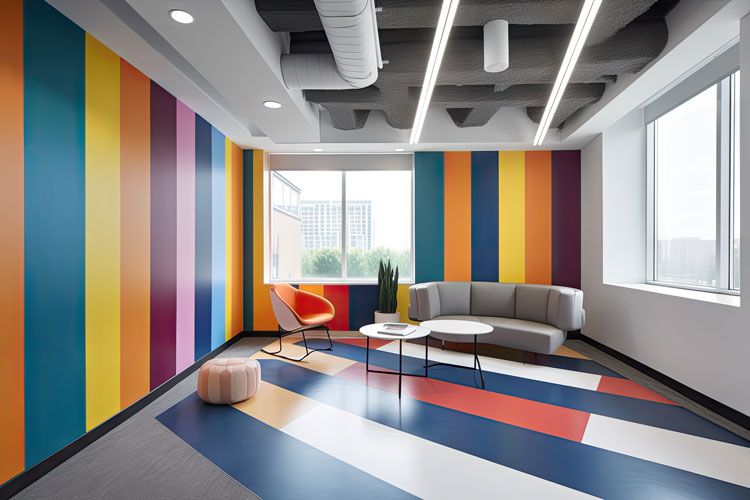
Tucson’s Top Color Trends for a Modern Home Makeover

When it comes to giving your home a fresh, contemporary makeover, the choice of colors plays a pivotal role. Tucson, known for its vibrant culture and artistic heritage, is a city that embraces the fusion of tradition and modernity. This article will explore Tucson’s top color trends for a modern home makeover, encompassing the latest palettes and styles that can transform any living space into a stylish sanctuary.

Understanding the Importance of Color Trends in Home Makeovers

Colors profoundly impact our emotions, perceptions, and daily experiences. In interior design, they can breathe life into a room, evoke specific moods, and reflect individual personalities. Staying updated with the latest color trends ensures your home remains fashionable and inviting.

The Impact of Color on Home Interiors

Psychological Effects of Colors

Certain colors have the power to evoke specific emotional responses. For example, warm colors such as red and orange have a tendency to promote feelings of energy and passion, while cooler tones like blue and green tend to induce a sense of calmness and relaxation. It is crucial to grasp these psychological effects when choosing colors for various rooms in your home.

Color Symbolism in Home Decor

Beyond emotions, colors also carry symbolic meanings. For instance, white represents purity and simplicity, while green signifies growth and renewal. Combining color psychology and symbolism can add depth and significance to your home’s interior design.

Embracing Modernity: Current Color Trends in Tucson

In recent years, Tucson has witnessed a shift towards contemporary color palettes that resonate with the city’s culture and environment. Here are some of the top color trends that are making waves in Tucson’s modern home makeovers:

Calming Neutrals: The Timeless Elegance

Neutral colors like beige, greige, and soft gray are versatile and timeless. They serve as an excellent base for any interior design style, allowing homeowners to add pops of color through furnishings and accessories.

Earthy Tones: Embracing Nature Indoors

Tucson’s love for nature is reflected in the increasing use of earthy tones such as terracotta, warm browns, and muted greens. These colors create a warm and inviting atmosphere, bringing the outdoors inside.

Vibrant Accents: Pops of Color for Visual Interest

Bold, vibrant colors like mustard yellow, teal, and coral are being used as accents to inject personality and visual interest into living spaces. They work exceptionally well against neutral backdrops.

Serene Blues: Creating Tranquil Spaces

Shades of blue, inspired by Tucson’s breathtaking skies, are being used to create serene and tranquil environments, particularly in bedrooms and relaxation areas.

Nature-Inspired Greens: Bringing the Outdoors In

Green is making a strong statement in Tucson’s interior design scene, with various shades like olive, sage, and eucalyptus being used to evoke a sense of serenity and connection to nature.

Color Trends for Specific Rooms

Each room in your home has its unique purpose and ambiance. Here are the top color trends for specific spaces:

Living Room: Warm and Inviting Hues

Opt for warm and inviting hues like soft browns, warm grays, and muted blues in the living room. These colors encourage relaxation and conversation among family and guests.

Bedroom: Creating a Relaxing Retreat

Consider soothing colors like calming blues, gentle greens, and lavender tones for the bedroom. These colors promote better sleep and a peaceful atmosphere.

Bathroom: Spa-Like Ambiance

Transform your bathroom into a spa-like sanctuary with earthy tones of beige, pale green, and subtle blues. These colors will create a soothing environment for self-care and relaxation.

Tips for Choosing the Right Colors

Selecting the right colors can be overwhelming. Here are some tips to help you make informed decisions:

Consider the Natural Light

Observe how natural light affects different areas of your home. Natural light can influence how colors appear, so it’s crucial to choose shades that complement your lighting conditions.

Complementing Existing Decor

Take into account your existing furniture and decor when choosing colors. Harmonizing colors with your current pieces ensures a cohesive and aesthetically pleasing interior.

Testing Samples before Painting

Before committing to a full paint job, test paint samples on your walls to see how they look at different times of the day. This will help you finalize your color choices with confidence.

DIY Home Painting Tips

If you’re taking on the task of painting your home yourself, follow these tips for a successful project:

Preparing the Surfaces

Ensure that the surfaces are clean, smooth, and free from any imperfections before starting to paint. Proper preparation is key to achieving a professional-looking finish.

Choosing Quality Paint

Invest in high-quality paint to ensure better coverage and longevity. Premium paints tend to provide more vibrant colors and require fewer coats.

Proper Painting Techniques

Practice proper painting techniques like using smooth, even strokes and allowing each coat to dry fully before applying the next one. This will result in a flawless and polished look.

Hiring a Professional Painter: When to Consider It

While DIY projects can be rewarding, certain situations call for professional help:

  • When dealing with complex painting techniques or patterns
  • If you have a large area to paint, such as an entire house
  • When you lack the time or physical ability to handle the project yourself

Hiring a professional painter ensures that the job is done efficiently and with a professional touch, providing you with stunning results that match your vision.

Conclusion

Giving your home a modern makeover with the latest color trends can completely transform its ambiance and aesthetics. Tucson’s color trends focus on embracing nature, creating serene spaces, and incorporating vibrant accents for visual interest. Understanding the psychological effects and symbolic meanings of colors allows homeowners to make thoughtful choices that resonate with their preferences and lifestyles.

Whether you opt for calming neutrals, earthy tones, or nature-inspired greens, each color trend uniquely contributes to your home’s overall design. Consider the natural light, complement existing decor, and test paint samples before deciding. For DIY enthusiasts, following proper painting techniques and using quality paint will ensure a successful and satisfying project.

Hiring a professional painter is a wise investment for more complex or extensive projects, such as painting an entire house or implementing intricate patterns. Their expertise and experience guarantee a flawless finish, making your home stand out in Tucson’s vibrant and artistic community.

FAQs (Frequently Asked Questions)

1. How do colors affect the mood of a room?

Colors can influence emotions and moods in various ways. Warm colors like red and orange can evoke energy and excitement, while cooler tones like blue and green promote calmness and relaxation.

2. Are neutral colors boring?

Neutral colors are anything but boring. They provide a timeless and versatile backdrop for any interior design style, allowing you to add personality through accessories and furnishings.

3. Can I use bright colors in a small room?

Yes, you can use bright colors in a small room, but balancing them with neutrals is essential to avoid overwhelming the space. Bright accents against neutral walls can create a visually appealing and dynamic environment.

4. How do I choose the right color for my bedroom?

When choosing a color for your bedroom, consider calming and soothing hues like soft blues, greens, or lavender. These colors promote relaxation and better sleep.

5. Should I hire a professional painter for my home makeover?

Hiring a professional painter is a good idea when dealing with complex techniques, painting large areas, or lacking the time and physical ability for a DIY project. Professionals ensure excellent results and save you time and effort.

cleaning painted walls

Cleaning Painted Walls: Best Methods

Contact our painting experts in Tucson by calling 520-327-3200.

Freshly painted walls can make the difference between a boring interior and exterior design and a stylish design that catches people’s eyes. 

Unfortunately, most people do not invest in cleaning painted walls. On average, you should clean your walls at least once a year. 

With over 65 years in Arizona, Wiese Painting Contractors Inc. has the experience to handle any painting job you put in front of us. We run a smooth operation that makes your home feel refreshed and stylish. Whether you own a commercial or residential property, our licensed and insured contractors are here for you. 

Here are some of the best methods for cleaning painted walls. 

Preparation 

Before you begin the cleaning process, you must rid your walls of dust or debris. You can dust the walls with a cloth, vacuum, or brush to prepare for cleaning. 

We recommend a foam craft brush for getting into corners and around edges. Also, make sure that you place a towel below the walls you plan to clean. Drips and spills are common when cleaning painted walls. 

Select a Cleaning Solution 

Next, you must select a cleaning solution to remove dirt from your walls. Your choice should center around what kind of paint you have on your walls. 

For matte, eggshell, or flat paint, you should use a mild cleaning solution. To create a mild wall cleaner, you can combine dye-free soap with dishwashing detergent. 

If you have a glossy paint finish, we recommend using a degreasing agent with your cleaner. These finishes are more durable than matte or eggshell coats, allowing you to use a stronger soap in your cleanser. 

If the paint job on your walls is oil-based, you may use an even stronger cleanser. A popular recipe for an oil-based cleaner is to mix a teaspoon of liquid dish soap with a tiny amount of ammonia. 

Washing 

When you wash your walls, you want to do it gently. If you are too abrasive, the paint will chip or peel off. Make sure you use the soft side of the scrub to rub the cleaning solution onto your walls. 

To achieve the best results, clean the wall in circular motions and work from the top down. Be careful to keep water away from electrical outlets to prevent dangerous sparks and electrical issues. 

If your regular cleaning solution did not do the trick, try spot-treating the walls using a mixture of baking soda and water. 

Drying 

If your sponge did not absorb all the water from your washing session, you should use a dry towel to mop up any extra liquid from your walls. Wait for your wall to dry before hanging pictures back up. 

Invest in Commercial and Residential Painting 

Having clean painted walls can enhance the aesthetic appeal of your home or business. Wiese Painting Contractors Inc. proudly serves the Tucson, AZ, community with top-notch paint cleaning services. Our skilled team can clean your painted walls quickly and efficiently with the highest quality equipment in the industry. 

If your home or business requires cleaning painted walls, you can call the Wiese Painting Contractors Inc. office in Tucson, AZ, at 520-327-3200. Read about our process to learn more interior painting preparations.

Chemical Resistant Floor Paint

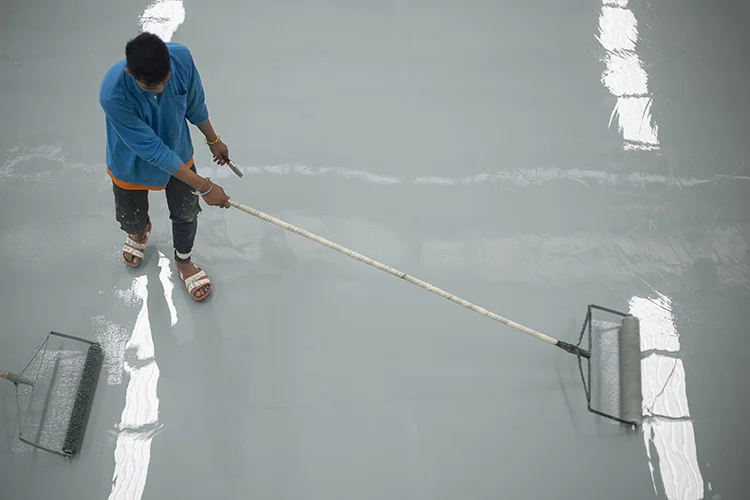
person applying chemical resistant floor paint

Almost all surfaces would be exposed to corrosives at some point in their lifetime. Most of these (like cleaning products) are pretty harmless, and your paint withstands without giving out. However, in an industrial environment, it is not so. They are exposed to chemicals, acids, alkalis, salts, and others that are harsh for most surfaces.

That is why you need to protect them with a coating that would resist the chemical without breaking. This type of paint would also resist any acid and alkali that is a part of the regular cleaning process and maintenance.

This article takes you through various chemical-resistant floor paint, maintenance, and more.

What is Chemical-Resistant Paint?

Chemical-resistant paint provides superior protection from harsh substances. It has been designed to shield the floor from chemicals. It is a type of alkyd paint that is thicker and harder when it dries. Moreover, it retains its good looks for a long time despite being in contact with corrosives.

You can apply it to any surface that needs protection from chemical spills. For example, floors, walls, doors/windows, utilities, ceilings, and more. Besides, it works on any substrate, including wood, metal, ceramic, concrete, and masonry

Chemical-resistant paint is available in various forms:

  • Epoxy
  • Polyurethane
  • Phenolic
  • Fluoropolymers such as Xylan and Teflon

Epoxy Coating/Sealer

Epoxy is a type of polyamide paint that provides an acid- and chemical-resistant coating for any surface when applied. An epoxy floor is available in two types: one-component, two-component, powder, and others.

One-component epoxy is used in new constructions as a base. The two-component epoxy goes over it, giving it color. It also protects against chemical substances.

Polyurethane

Polyurethane is a type of synthetic resin that can be applied as a paint or floor coating. It provides durability and chemical resistance, making it the best choice for various surfaces. In addition, polyurethane serves as an excellent medium for applying pigments, primers, and sealing materials. Sought for its colorful appearance, it is often used in homes and commercial spaces.

Phenolic Coating/Sealer

A phenolic coating is a type of two-component resin that is applied either air or flash-dry. It provides excellent chemical resistance to surfaces like wood, metal, plastic, and masonry.

Fluoropolymers (Xylan)

Xylan is a fluoropolymer with Teflon consisting of thermoplastic resins. When dried, it slips easily on surfaces. It also provides excellent adhesion along with chemical resistance floor paint.

Is Epoxy Floor Chemical Resistant?

professional cleaning epoxy floor

Epoxy coating provides superior chemical resistance against most corrosives. Industries often use it for painting concrete floors and walls. It is ideal for use in high-exposure areas. For example, secondary containment, trenches, pump pads, and solvent storage.

It is also ideal for applying on other surfaces such as metal and PVC. The advantage of using chemical-resistant epoxy is that it is cheaper than paint. This is because you would have to apply multiple layers in an industrial environment. Ensure that you read the application instructions. The application process varies depending on the product.

Is Silicone Caulk Chemical Resistant?

Yes, silicone caulk is chemical resistant. Industries use it for sealing pipes and fittings where chemicals are used at high concentrations. For example, laboratories, hospitals, wastewater treatment plants, and pharmaceutical companies. It works well with compounds such as hydrocarbons, oils, greases, organic solutions.

What is Acid-Resistant Paint?

Acid-resistant paints can prevent corrosion caused by acids, alkalis, salts, and bacteria. They are also water-resistant. These paints generally include polyurethanes, alkyd resins, epoxy resins, acrylic resins, and vinyl. They can withstand a wide variety of acids such as sulfuric acid, nitric acid, hydrochloric acid, phosphoric acid, and more.

Which Paint Coat Gives Extreme Chemical-Resistance?

According to experts, polyurethane is the most chemical-resistant floor paint available on the market. This is because they can resist acid, salt, mildew, fungi, bacteria, alkali, and other harmful chemicals. As a result, polyurethane paint is ideal for use in chemical facilities. For example, food processing areas, labs, hospitals, and pharmaceutical companies.

Chemical Resistant Epoxy Coating Vs. Paint

Epoxy paint and coating both resist corrosives to some extent. However, they are not the same and have some noticeable differences. Here are a few points you may have to consider if you choose it for your industry floor.

  • Epoxy coatings are thicker than epoxy paints.
  • Paints may not be as chemically resistant as an epoxy coating.
  • Epoxy coating is quite tricky to apply.
  • Coatings generally have a longer working life than paints.
  • Epoxy coating is more resistant to damage from abrasion or impact. However, if exposed to sunlight, it chalks and abrades faster.

How do You Protect Concrete Floors from Acid?

An epoxy coating protects concrete floors from acid and other corrosives. It is famous for its excellent chemical resistance. Not only does it offer protection against acids, but it also prevents damage caused by salt, alkalis, and other common corrosives.

Chemical Resistant Concrete Coating

Concrete coating is a protective layer applied to concrete surfaces. Generally, it is more resistant than paint. There are several types of coatings, including epoxy, polyurethane, and other hydrophobic solutions. While some are chemical resistant, others only resist water and some organic liquids.

Industries use a chemical-resistant concrete coating to protect surfaces from corrosive substances. They are a good solution for areas with high exposures to acids or alkalies.

Conclusion

There are many different types of paints and coatings available for industrial use. Some of them are more chemical resistant than others. If you want a chemical-resistant floor paint or coating, look for epoxy or concrete coatings.

professional chemical cleaning the floor

Epoxy paint protects against chemicals, fuels, oils, solvents, water, and alkalis. It also provides longer service life than other types of paints. Epoxy paints are available in many colors, so you can choose the one that best suits your needs. Make sure it is resistant to the chemicals you need protection from.

If you are looking for epoxy paint of any type, there are many suppliers to choose from. Look for a company that has been around a long time. It should also have a reputation for selling quality products.

Here at Wiese Painting, we have over 65 years of experience as professional industrial and commercial painters. We guarantee that any hard-to-paint color or surface, like concrete, is tackled with professionalism and tricks that have been acquired over the decades. You will love the look of your freshly-painted home or business, so contact us today for your free quote!
Painting Concrete Floors

Painting Concrete Floor in Basement

Painting Concrete Floors

Concrete floors are not only durable but also easy to install and maintain. But, the typical gray color of concrete can make basement floors seem cold and uninviting.

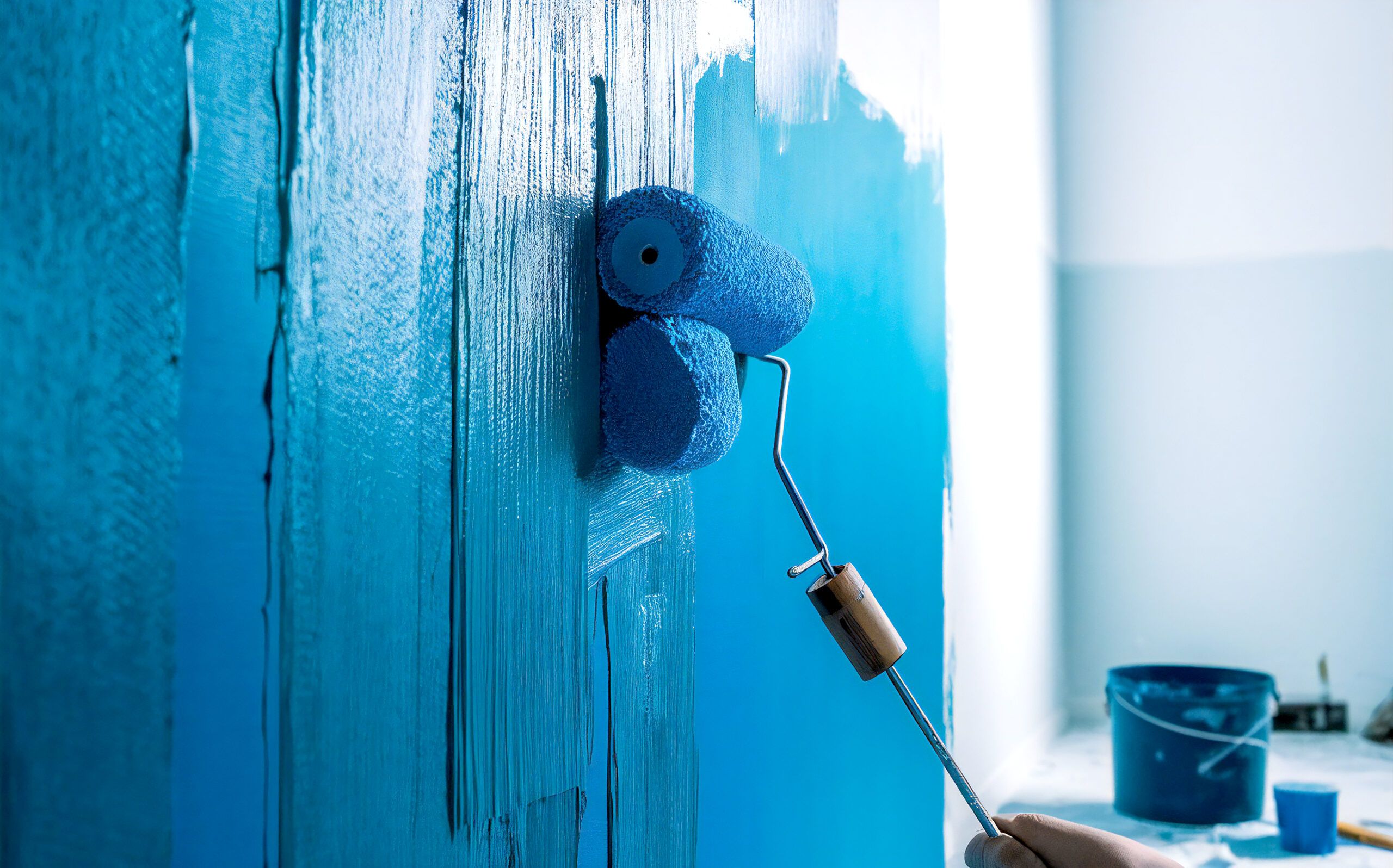
Painting concrete is one of the most popular ways to spruce up the basement floor. It is also a straightforward process that can add warmth and color to any concrete surface.

Step 1 – Cleaning and Priming Your Floor: Start by sweeping away any dirt or debris before priming your floor with our favorite primer.

Step 2 – Adding Color: Choose a basement paint color and apply it to the concrete floor.

Step 3 – Maintenance: Maintain your basement paint finish by sweeping and dusting daily.

Painting concrete floors can be an intimidating task, but it doesn’t have to be! This article walks you through the process and also what tools to use. We’ll cover everything from prep work, paint types, benefits, colors, and more!

Is Painting Concrete Floors a Good Idea?

Yes! It’s a great idea to paint concrete floors. Painting is one of the most popular ways to spruce up basement flooring. Concrete paints help mask the surface stains and the years of wear and tear. Moreover, it also extends the lifetime of the concrete by preventing further damage. It also comes in different colors, finishes, and formulas, depending on the type of surface.

How Long Does Painted Concrete Last?

Painting concrete floors is a great way to add color and interest. However, for long-lasting concrete paint, ensure that your floor is clean and dry before painting. You’ll also want to prime it with a primer first!

Depending on the kind of paint you use, the concrete paint can last anywhere from three years to five years! However, the lifetime depends on certain factors such as:

  • Type of Paint
  • Level of Footfall
  • Exposure to Elements
  • Quality of Paint
  • Maintenance

Most brands suggest you apply a new coat every 3-5 years. A well-maintained concrete floor can help extend the lifetime of the paint. It shouldn’t be a problem since painted concrete is easy to maintain.

Does Painting Concrete Floors Make Them Slippery?

Painted concrete can be slippery when wet. The paints and sealers have a nonporous, and smooth coating that forms the external layer. This smoothens out the texture giving a slippery feel. Grits are added to the final coat of paint or concrete sealer, adding grip to the surface. Three common additives used to create texture are:

  • Silica Sand
  • Aluminum Oxide Beads
  • Polymer Grits

Sand and aluminum beads are heavy and settle in the bottom. This doesn’t go well with the application, thereby reducing its effectiveness. On the other hand, polymer pieces are lightweight and go more even, making them a popular choice.

Benefits of Painting Concrete Floors

Painting concrete floors is not an easy job. Concrete is porous and can absorb paint and moisture. Hence it requires additional prep work to ensure that the paint adheres well. But, despite the work, a painted concrete can spruce up the place.

Here are the benefits of painting concrete floors:

  • Prevents Moisture & Mold: Concrete being porous is notorious for rot, mold, and mildew. A painted floor can help prevent the moisture from seeping in, especially the basement floor.
  • Easy Maintenance: Concrete floors are challenging to maintain. The surface being porous, the grease stains, dust, and debris are impossible to clean. However, concrete paint seals the pores, thereby making cleaning easy.
  • Enhances the Appearance: Bare concrete slab can be grey and drab. A fresh coat of paint on the concrete floors can add visible warmth, color, and vibrancy to your basement or garage.
  • Increases Safety: Concrete floors often have cracks and an uneven surface. Painted concrete can help reduce the risk, creating a visible, smooth, and even floor.
  • Increases the Market Value: Painting the basement floor has an ROI of up to 70%, reflecting on the home’s resale value.

What Kind of Paint Do You Use When Painting Concrete Floors?

Worker Applying Epoxy Paint on Concrete Floor

Whether you are painting your garage floor, basement floor, patio, or only your basement laundry room floor, it pays to know what paint to buy.

Epoxy paint is best suited for concrete floors since they are durable and can take a lot of abuse. It also holds better than latex paint. They work well for garage floors since they are resistant to oil, gasoline, and chemicals. However, they are not suitable for basements since they tend to attract moisture.

Acrylic paints are the cheapest option, but they don’t last long and can be challenging to clean up. The best choice would be concrete basement paint that comes with an epoxy or acrylic base. They are durable, easy to clean, and cost-effective without compromising on quality.

What Is the Best Color to Paint a Basement Floor?

It isn’t easy to choose basement floor paint colors as the basement has very little natural light. The best way to decide on color would be by asking yourself what you want out of your basement.

The most common choice, black, can give off an elegant appeal, but dark colors absorb more heat. White is the most popular basement color as they don’t absorb heat and reflect light well.

Teals, greys, blues, greens can help create a relaxing atmosphere in your basement. They do not absorb too much heat, which is excellent if you plan on entertaining guests.

TIPS:

  • Before painting, test the colors on a hidden section of your basement to ensure you like them. This gives you an idea to test if they work well with the lighting in your basement.
  • Choose a paint color that will help hide dirt. In addition, you want something easy to maintain.
  • Also, keep into consideration the size of the room and the decor.

What Is the Best Way to Paint a Concrete or Basement Floor?

Concrete is not an easy surface to paint. It is porous, breathable, and also absorbs paint to an extent. However, the surface is pretty versatile, offering many options for repairs and improvements.

With the right tools, concrete floor materials, and techniques, you can turn a drab basement floor into a thing of beauty. The below steps can guide you to painting concrete floors.

Clear the Space

Before you paint, you must be able to see the floor. This will help you spot the issues like cracks firsthand. Spend time cleaning away what you don’t need. Donate, recycle or sell; do whatever works for you. Moving the remaining items into another room and create a space in your basement. Also, if the area is carpeted, remove the old carpet and area rugs to paint the concrete flooring.

Get Rid of the Gunk

Basement floors can also contain old paint splatters, adhesive, dirt, grime, and other substances. Paint can stick to these spots and make them stand out. Hence, you need to ensure that these are removed before the paint application.

Carpet glue is one of the strongest adhesives around and can be difficult to remove. Douse the glue with a lacquer thinner and then use a scraper to remove all the adhesive. You can also use the same method to scrape out gunk like hardened dirt and debris. Scraping doesn’t need to be backbreaking work if you use a scraper with a long extension pole.

Clean and Dry the Surface

New paint adheres better to a clean and dry surface. Start with a concrete degreasing product suitable for your floor (interior or exterior). These products are applied to damp floors. Hence you may want to use protective eyewear, gloves, and clothing before application

Then, use a floor cleaner to clean the basement concrete floors. Next, use a push broom to scrub the floor and vacuum using a shop vac. And let it dry thoroughly. It might take some time, but you will be able to see the spots where paint has been absorbed by the concrete.

Exterior surfaces like garage floors and patio floors can be easier to clean. First, wet the surface and spray the degreaser. Next, use a push broom to scrub the floor and wash it off with a garden hose. Finally, any stubborn rust spots left behind can be clean with a wire brush.

Fill Any Cracks and Holes

Fill Any Cracks and Holes Before Painting Concrete Floors

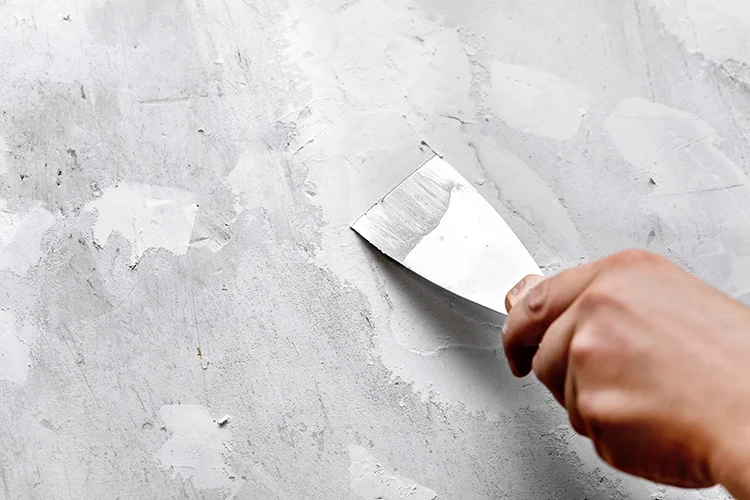
Cracks and holes should be filled before the painting concrete floor. Use a concrete filler for this step. It can flex with movement in case there is any settlement or shifting of the foundation after application. Use a putty knife to spread the filler over the cracks. Apply a second coat if needed and let it dry completely.

You can also use this time to fill any other holes in the concrete floor with a concrete patch or epoxy putty. You can find them at home improvement stores like Lowes or Home Depot. Again, let these products cure overnight before painting.

Holes in concrete basement floors can be hard to patch if the foundation has settled or shifted. This creates a gap between the concrete and bricks, stones, or rocks underneath. In such cases, remove any dirt from under these holes first with a wire brush.

Sand the Floor

Sand the entire surface of the concrete as the final step of prep work before priming. Sanding the rough areas ensures a smooth finish across the entire floor. Sweep or vacuum the dust with a construction vacuum or a shop vac. You do not want the dust to get under the paint as this will lead to peeling.

A clean floor is essential for the paint to adhere to the floor. Clean the basement floor with soap and water to ensure that it is free of dust. Keep in mind that there is no soap residue on the floor. Let it dry completely for 24 hours. Moisture on the floor can prevent the paint from adhering.

Use painter’s tape to mask off the walls and the baseboards along the edges of the room.

Prime After Painting Concrete Floors

A primer coat ensures that the paint sticks to the concrete floor. The primer that you choose should be compatible with both concrete and epoxy paints. Ensure that the primer you choose is fit for use in both interior or exterior concrete floors.

Use a paintbrush to apply the primer along the edges of the floor and cut in the edges. You can use the lambswool roller for the rest. Apply two coats and let dry for 24 hours.

Apply Epoxy Paint

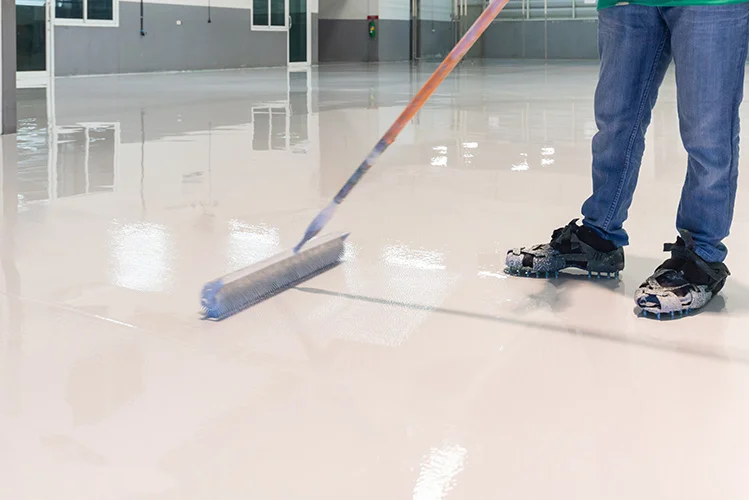
Worker Applying Sealer as Top Coat Over Epoxy Floor

Once the primer is dry, apply the concrete paint. Start from the farthest corner and work your way to the door. Apply the paint and let the first coat dry for 12 hours before painting a second coat. As a top coat, apply a concrete sealer over the painted basement floor.

In the case of epoxy paint, you’ll need to mix the two parts as mentioned in the label. Then, use the same process you used for the primer to apply the epoxy. Most epoxy paints need only one coat. (But you may want to check the label firsthand). Lastly, seal the floor with a concrete sealer compatible with epoxy paints.

Keep in Mind:

Fill the paint tray half full with paint. Next, load the roller with paint from the paint tray and roll the paint on the concrete floor.

Wash the roller and paintbrush with dish soap and hot water right after you’ve finished.

Follow the Manufacturer’s Instructions on Painting Concrete Floors

Ensure that you follow the manufacturer’s instructions regarding the temperature, ventilation, and humidity. The cure temperature and humidity are essential for a successful paint job. With the right combination of the factors above, you risk the paint lifting off within a year.

Painted Concrete Floor Care and Maintenance

Painted concrete floors are becoming quite famous due to their rustic, industrial-like appearance. They are easy to clean and maintain. However, they pose a unique problem. The painted surface is coated with a sealant to protect the paint underneath. Therefore, the cleaner that you use should not harm the integrity of the concrete.

Here are a few things you can follow to ensure a longer lifetime.

  • Daily sweeping prevents dust accumulation. The buildup of dirt can scratch the surface of the concrete floor.
  • A mild soap and water solution will work fine for daily cleaning. Use a damp microfiber mop to clean the floor. Avoid water pooling on the floor.
  • Avoid using acid. Instead, use a diluted solution of vinegar. Vinegar not only cleans the floor but also prevents the growth of mold and mildew.
  • Concrete floors should be resealed every two years to protect the paint job.

Conclusion

With the right paint, you can turn your basement floor into a bright and welcoming space. Painting is one of the most popular ways to spruce up basement floors, and it’s inexpensive and easy to apply. However, it has a long drying and curing process. You may have to wait as long as a week before walking on it again.

Depending on the type of paint and protective coat or sealant you use, painted concrete floors can last anywhere from three to five years! After that, you’ll have to top it up with a fresh coat of paint.

If you want a paint finish that lasts longer and looks more professional, then epoxy is the one. Epoxy is better than other paints because it can last longer and it looks good too. Besides, stained and painted concrete floors also improve the look of concrete.

Here at Wiese Painting, we have over 65 years of experience as professional industrial and commercial painters. We guarantee that any hard-to-paint color or surface, like concrete, is tackled with professionalism and tricks that have been acquired over the decades. You will love the look of your freshly-painted home or business, so contact us today for your free quote!
Industrial Painting Equipment

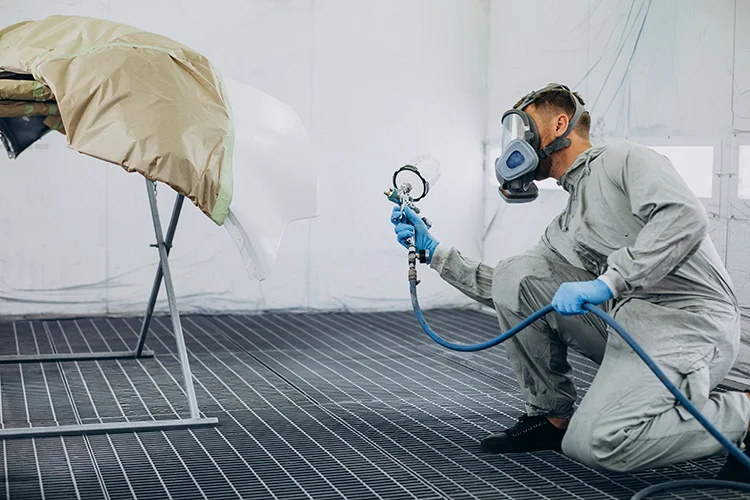
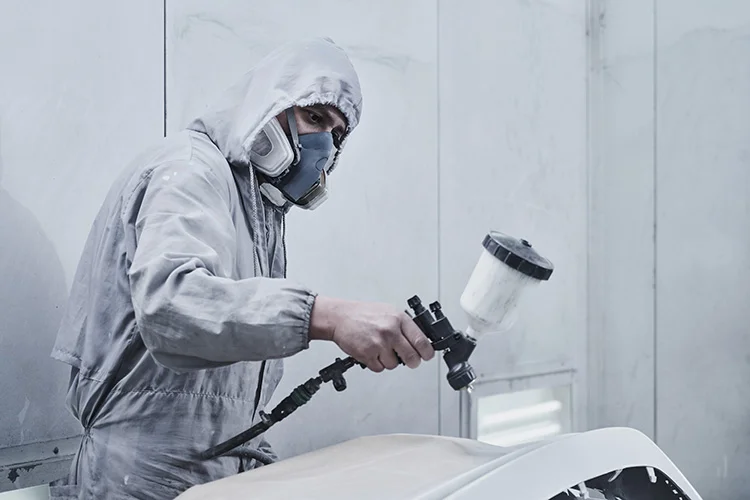
Industrial Painting - Car Mechanic Using Paint Spray Gun

Industrial painting is a massive industry with quite a lot of paint application techniques. Be it traditional, modern, or cutting-edge technology, the technique selected depends on the project. And with every application technique comes different painting equipment.

To better understand industrial painting, you should know the different types of industrial painting equipment.

What Is Industrial Painting?

Industrial painting is a diverse field with multiple applications, surfaces, and painting methods. It is used in warehouses, garages, factories, and machines. Rather than aesthetic purposes, it serves to protect the surface from deteriorating. They also help to stop leaks and prevent corrosion. And these are the tip of the iceberg.

In short, industrial paint provides more functionality in addition to protecting from general wear and tear. The paint is made of polyurethane and epoxy, which ensures a smooth and durable coating. Further addition of additives makes the paint fire-resistant.

Professional painters use a variety of tools and techniques to apply industrial paint.

  • Roller works best in flat areas, especially walls and floors.
  • Air Spraying applies the paint as a fine mist through the atomization method. Compared to other methods, liquid spray painting gives a rather smooth application.
  • Airless Sprayer uses pressure to apply paint. They are quick, hence efficient in painting large areas.
  • Paintbrush is the traditional painting method and also the most time-consuming. However, it works the best for smaller areas.
  • Electrostatic application is best used in manufacturing since they require a professional touch. In this method, the paint bonds via electricity.
  • Dip Coating is a unique method where the technician dips the component in a vat of industrial paint.

What Is a Painting Machine?

Painting machines are automatic systems that apply paint in manufacturing industries. While some are hand-operated, others are robot operated. The latter also has conveyor systems to quicken the process. For example, spray guns. You can see them in various industrial painting projects and home applications. The spray gun uses high pressure to paint a thin, even coat of paint.

Painting machines have a vast range of coating applications. Above all, it reduces operating costs, increases consistency and also the product quality.

What Is the Best Industrial Paint Sprayer?

Industrial painting is a huge task and requires machinery of an appropriate size. Depending on the application, the equipment can vary in size and capability. Here are a few types of paint sprayers suitable for industrial use:

Robot Arm Industrial Paint Sprayer

Paint sprayers are of two types: Airless and those driven by air. They have different specifications and restrictions. The best sprayer depends on the project.

Airless Paint Sprayer

With an airless sprayer, you pump the paint straight from the container without a need for compressed air. Depending on the attachment, they accommodate thin stains to thick coatings.

They are also the fastest and can spray the most coating in a limited amount of time. These pumps are suitable for large projects such as industries. They give uniform coverage and don’t require you to thin the paint.

Compressed Air Sprayer

Compressed air sprayers are used both in industrial and home applications. It uses compressed air to create a smooth and uniform finish. The typical setup includes a spray gun, compressor canister, and a high-pressure hose. Unlike the airless sprayer, you need to thin the paint beforehand. Air spray is easy to use but requires plenty of prep work. On the flip side, they consume a lot of paint and are less versatile than an airless sprayer.

HVLP Sprayers

HVLP or High-volume, low-pressure (HVLP) sprayer uses a combination of air and pressure to create a thin layer of paint. They have a high level of transfer efficiency resulting in more paint reaching the sprayed area. On the flip side, it doesn’t work well with think paint types like latex. Depending on the paint job, you may have to thin the paint. Due to the nature of the equipment, they are ideal for detail and smaller areas.

Specialty Sprayers

The sprayers mentioned above give a rather smooth and even finish. However, if you require a different finish, you may need a specialty sprayer. From handheld spray guns to sprayers that use carts or stands, there are quite a few to suit your every need. In addition, they allow for flexibility depending on the application.

  • Texture sprayers allow creating textures such as popcorn, orange peel, knockdown, and splatter.
  • Line striping machines help create paint lines on the ground. They use a paint sprayer aligned with a roller to create crisp lines. They also have a handle to roll the equipment on any surface.

Electrostatic Painting Equipment

Otherwise called powder coating, the electrostatic painting uses an electrically charged powder. During the process, both the product and the powder are electrically charged. This ensures a strong bond between the product and the powder. In some cases, it is combined with other spray painting techniques for a better finish.

  • Air-atomized electrostatic spraying uses a combination of electricity and compressed air to paint.
  • Air-assisted airless electrostatic spraying depends on electricity, compressed air, and a small orifice for painting.

Paint Finishing Equipment

Paint finishing generally incorporates many processes, including paint application and also finishing. The tools used in the process are called paint finishing equipment. The finishing coat adds a layer of protection against chemicals present in an industrial environment. They serve two purposes; first and foremost, functionality and then aesthetics.

Car Mechanic Using Paint Airbrush Pulverizer

The first step in applying any coating is to prepare the surface. In an industrial arena, the sprayer itself handles the mixing part. They have multi-component spraying equipment meters which mix the paint beforehand.

Coming to painting, conveyor systems are critical for paint application. They allow for a more efficient painting. Furthermore, it also allows the technician to control the application. Every paint application method ( dipping, powder coating, spraying) has a different conveyor system.

The final step of the painting process is the paint finishing which is done in a curing oven. Every oven features a shell, heater unit, and air system (supply, circulate and exhaust). While the times vary, every product cures in the oven for at least 30 minutes.

Conclusion

The industrial paint application process is quite complicated, to say the least. There’s a lot that goes into formulating and executing industrial painting projects. Depending on the type of paint, application, and method, the equipment also varies. Sometimes the equipment itself is the deciding factor for choosing the application process.

Before investing in paint equipment, it is crucial to weigh the pros and cons. And that’s why you need an expert painter guiding you in the process. Contact an industrial painting services company with your questions. And they will be able to give you professional assistance.

Here at Wiese Painting, we have over 65 years of experience as professional industrial and commercial painters. We guarantee that any hard-to-paint color or surface is tackled with professionalism and tricks that have been acquired over the decades. You will love the look of your freshly-painted home or business, so contact us today for your free quote!
Everything You Need to Know About Painting Over Graffiti on Walls

Man Spraying Graffiti on WallsGraffiti on Walls (Word Count: 1,496 / Read Time: 6 min.)
Any images or lettering painted on public places like buildings, fences, train cars, and overpasses is called graffiti. They are usually made using spray paints and permanent markers. 80% of graffiti is the result of tagging. Another 10% are gang-related, and 5% are artistic.

Graffiti has been increasing over the past few years. Even cameras and warning signs don’t deter the Banksy wannabe. The faster you remove the graffiti, the less likely it is to appear again. Reports say that there is a zero occurrence of the same if removed within 24-28 hours.

But how do you remove graffiti from different surfaces? Unfortunately, the answer is not that simple. It all depends on the type of surface and how long it has been there. This article walks you through the different graffiti removal techniques.

We will be taking an in-depth look into exactly what it takes to paint over graffiti in the following discussions:

Can I Paint Over Graffiti?

Painting is one of the easiest and cheapest methods of removal. It also causes the least amount of damage to the surface. Furthermore, repainting allows you to use a glossy enamel which deters further vandalism. It makes it difficult to paint over than a flat finish. However, it may not be easy to get an exact color match unless you have leftover paint lying around from when you first painted.

What Paint Do You Use to Cover Graffiti?

Experts recommend glossy paint with a satin or semi-gloss finish to cover graffiti. The reason being, it resists any marks, even graffiti, than any other finish.

Can You Spray Paint to Cover Graffiti?

Spray paint doesn’t do well in covering graffiti in large areas, and you also run the risk of the graffiti bleeding through. However, if you have small areas that need covering, you can try spray paint.

Best Paint to Cover Graffiti

Best Paint to Cover Graffiti on WallsGraffiti can be a painful sight, be it your home or outdoors. Here are some paints that provide exceptional coverage and help hide those stains.
  • Sherwin-Williams Frazee Paint Graffiti Cover-Up: Water-based paint with a flat finish formulated for exterior graffiti
  • Visions Workhorse™ Graffiti Cover-Up: Provides excellent coverage and long-lasting finish
  • Zinsser Cover Stain: Primes and seals the affected surfaces and prevents the stains from reappearing

Oil-based paint works the best to cover over graffiti, especially on metal surfaces.

How to Cover Unwanted Graffiti on Walls

There are many ways to remove graffiti from different surfaces. However, the inexpensive method of all is repainting. With proper prep work and paint, you can conceal the graffiti to a large extent.

Here’s how you remove graffiti from surfaces.

Choose the Right Primer

Preparing the surface and priming are the essential steps to a successful paint job. When it comes to graffiti, you need a stain-blocking primer. They absorb the older paint beneath and prevent it from bleeding through the new coat. It is imperative when you are using lighter colors to cover graffiti.

On another note, light color cannot conceal graffiti particularly well. In this case, you may have to remove graffiti before painting. Either pressure-wash it or use chemical solvents to strip the paint.

Choose the Right Paint

Coming to paints, it is better that you choose oil-based glossy paints. It makes it difficult for future graffiti to stick to the wall. Moreover, oil-based paints are durable and generally used on exterior surfaces. Water-based and latex paints are not as durable and can cause graffiti to bleed through. If the graffiti bleeds, use a stain primer-sealer to stop further damage.

Coming to the color, dark colors are the easiest to paint over if you can match the color. It’d be great if you have some old paint on hand. Otherwise, you may have to take samples to the paint store. For lighter base colors, switch to a darker color like brown or black. They are easy to color match if you are in a graffiti-prone area.

Make a note to buy extra paint cans. In case of any future vandalism, you can paint the spot instead of the entire wall.

Surface Preparation

All the surfaces should be clean of dirt or grease since they hinder paint adherence. Use a rag to wash the surface with a mixture of soap and water. In the case of a large surface, a pressure washer should work well. It should be dry completely before you paint.

Primer

The graffiti can bleed and show through the new paint. To prevent this from happening, prime the wall with an even coat of stain-blocking primer. Let it dry for 3-4 hours or according to the manufacturer’s instructions.

Paint Over the Graffiti

For a successful paint job, match the new paint with the base color. Draw a border around the graffiti and paint over it with a brush or a roller. Allow it to dry for 3 – 4 hours in normal drying conditions and paint another coat.

How to Paint Over Indoor and Outdoor Graffiti

When it comes to outdoor graffiti, you need a product that primes and seals at the same time. This prevents the stains from resurfacing on the afresh painted surface. The following method helps to cover up graffiti stains:

Surface Preparation

  • Before painting, ensure that the wall is dry completely. It should be free of anything that hinders the adhesion.
  • Remove loose and failing material with a stiff bristle brush to a sound edge.
  • Use a fine-grade abrasive paper to feather sound edges.
  • Ensure that the wall is free of contaminants. Use a mold remover to remove all visible signs of organic growth on the surface. Follow manufacturer’s instructions for a proper application.
  • Rinse the surface with clean water to remove any residue.
  • Fill in the cracks and small surface defects with a suitable filler. Finally, sand it down to a smooth surface.
  • Once the prep is complete, the moisture content of the wall should not be more than 18%.

Priming

  • Prime the wall containing the graffiti with a coat of primer.
  • Allow it to dry for no less than 2 hours.

Decoration

  • Decorate with two full coats of exterior paint to conceal the graffiti. Allow a minimum drying time of two hours. The time between the coats depends on the brand and also the drying conditions.

What is the Best Way to Remove Graffiti Paint from Walls?

The graffiti cleaners and solvents vary depending on the surface. You can buy them from hardware stores or paint stores in your locality. Keep in mind that you need to remove graffiti within 24-48 hours for the products to work.

Removing Graffiti Paint from Brick WallsBrick and Concrete – Use a heavy-duty paint stripper like the one from Sure Klean to cut through and remove graffiti from any masonry surfaces. The gel consistency of Sure Klean enables it to be applied with roller, brush, or spray equipment. Allow the product to work its magic and use a pressure wash to remove all residue.

Metal – Remove graffiti from metal surfaces with a small amount of paint thinner. If that doesn’t work, use steel wool to scrub it in a gentle manner without scratching the surface.

Glass – Most latex paints need only soap and warm water. Soak them first and then scrape them away.

Plastic – Use a light penetrating oil to remove graffiti. Do not use a thinner as that can soften the plastic surface.

Wood – For unsealed wood use, a power wash to remove graffiti. In the case of sealed wood, you can use mineral spirits.

Does Anti-Graffiti Coating Work?

Anti-graffiti coatings work by preventing the paint from adhering to the surface. They are made of clear polymers that form weak bonds with the substrate. This allows for easy removal.

Once graffiti appears on the surface, you can remove it using a power wash. Unfortunately, the coating also gets removed in the process.

Conclusion

No matter how beautiful graffiti may be, it is still a nuisance since it can attract street delinquency. However, removing it is not an easy task. Depending on the surface and the paint, you would be removing graffiti in different ways. This is because every substrate interacts with the paint differently. However, the easiest of them all is repainting over the graffiti. It also causes the least amount of damage to the substrate.

On the other hand, you may find it challenging to find a color match. Without an exact match, you may end up painting the entire wall. Also, if not appropriately treated, the graffiti can bleed through the new paint.

Here at Wiese Painting, whether it’s removing unwanted graffiti on walls or you want to give your home a fresh new look, we have over 65 years of experience as professional painters. We guarantee that any hard-to-paint color or surface is tackled with professionalism and tricks that have been acquired over the decades. You will love the look of your freshly-painted home or business, so contact us today for your free quote!